AI Might Be Your New Favorite Marketing Tool, but the Future is Still Human
If you’ve spent any time on LinkedIn, or in a meeting, or reading your work email, or just . . . existing . . . lately, you’ve likely heard the steady drumbeat about AI. Some treat it like a magic wand that will automate everything by the weekend; others view it with a bit of healthy skepticism, wondering if “the machines” are coming for the creative soul of marketing. Or maybe you saw an episode of “The Orville” years ago about the robots taking over an entire planet and wiping out humanity and, like me, feel the need to say “please” in your prompts. Just in case.
The reality, we think, is somewhere in between, something much more exciting, and human.
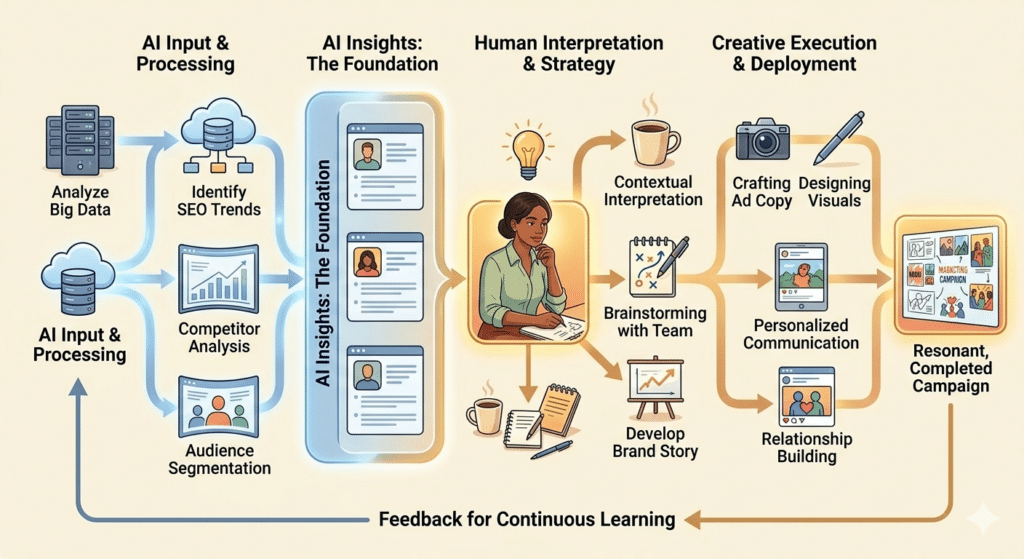
AI isn’t here to replace the strategist, the designer, or the relationship builder. Instead, it’s the highest horsepower power tool to land in the marketing toolbox in a while. Think of it as a high-performance car: it helps us drive faster, farther, and more efficiently, but it doesn’t know where we’re going or why the journey matters. That critical part answering the “where” and “why” requires 100% human input and decision-making.
From Grunt Work to Great Work
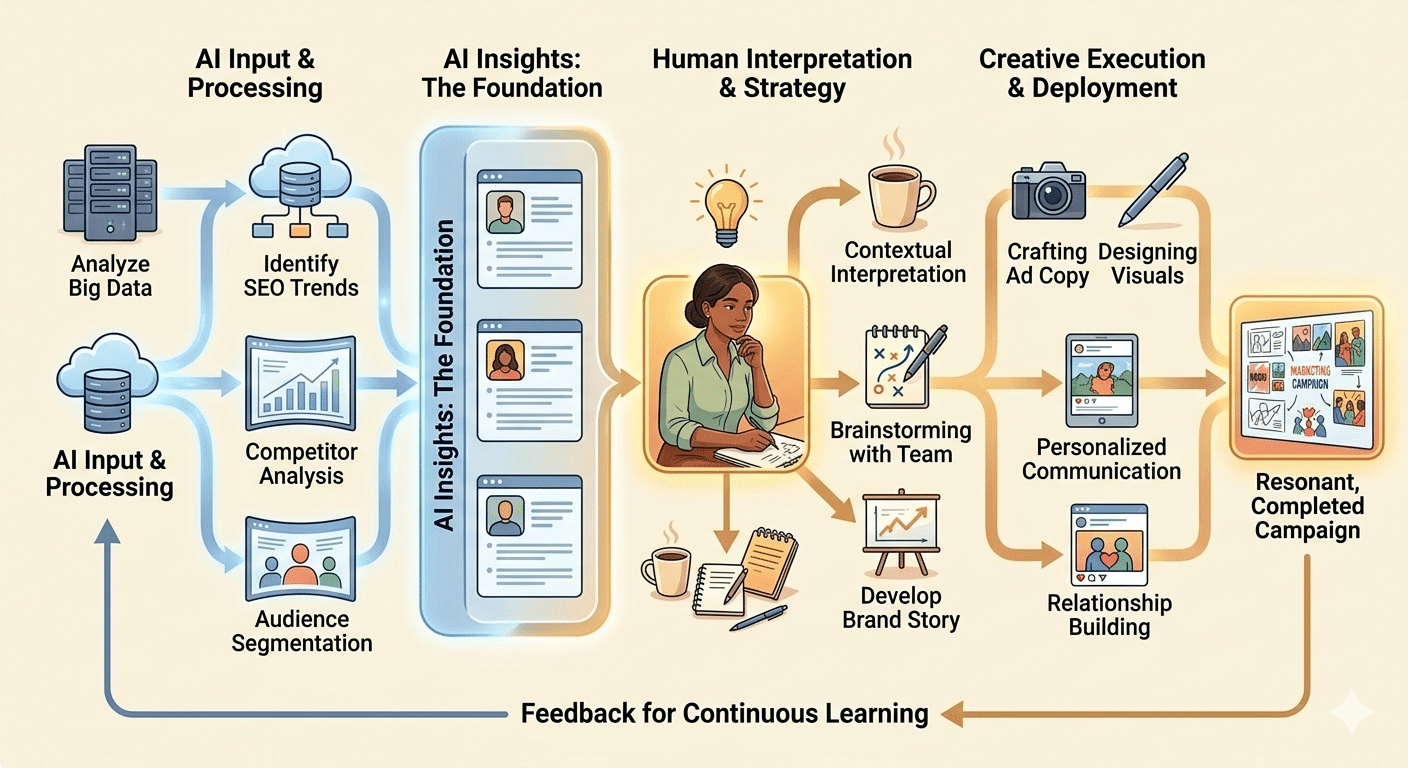
One of the biggest wins with AI is its ability to handle the heavy lifting of data and repetitive tasks. Whether it’s analyzing thousands of customer touchpoints in seconds or helping to categorize vast libraries of content, AI excels at the binary.
By offloading the time-consuming administrative tasks, like initial SEO research or developing a calendar of social media posts, we gain back our most valuable asset: time. That’s time we can redirect toward high-level strategy, deep-dive branding, and actually talking to clients.
The Ultimate Brainstorming Partner
We’ve all stared at a blinking cursor on a blank page, waiting for inspiration to strike for a social media campaign or a new ad headline or a fresh blog for your website. AI is the cure for the blank page. It’s an incredible tool for generating Version 1.0 – the rough ideas, the broad strokes, and the creative sparks that we can then refine, polish, inject with human personality, and then refine some more.
AI can suggest ten headlines, but a human expert knows which one will actually resonate the audience. Us humans will then spend significant amounts of time refining the message the old-fashioned way: by rubbing two brain cells together. We know what the brand’s voice is, what sounds natural, what makes sense to say, what the right terms are because we have a relationship and a partnership with a client where these nuances are learned, explored, and understood, sometimes just by inference and intuition. AI cannot do that.
AI can help generate ideas for a minimalist layout or a quick video, but it takes a trained human eye to ensure the balance, feel, and voice align with a brand’s soul. It takes humans to make sure the video or image is actually correct, showing the right number of fingers per hand or not putting a horse’s head on a bull’s rear-end (true story), because AI sure does make an awful lot of mistakes, and because there’s much more left to chance with AI generated creative.
The Irreplaceable Human Element
Marketing, at its heart, is about connection. It’s about understanding the nuance of a client’s frustration, the excitement of a new product launch, and the trust built through partnership.
AI doesn’t have “gut feelings.” It doesn’t understand humor, empathy, irony, or the subtle shift in a room during a creative presentation. It can’t grab a coffee with you to discuss your five-year goals or ask how things are going and chat about life outside of work. These relationships underpin a successful marketing partnership because they’re built on connection.
Moving Forward Together
The goal shouldn’t be exclusively “AI-powered marketing,” but rather human-led, AI-assisted marketing. It’s okay to use AI. In fact, by embracing AI, we aren’t stepping back, we’re stepping up. We’re using technology to be more precise, more efficient, and more creative than ever before, all while keeping our hands firmly on the wheel to ensure we know where we’re going and why we’re going there.
The future of marketing more human than you might think, just with a bigger tool belt.